For compliance or continuity, The Fast Fire Watch Company back business operations by closing safety gaps when fire systems are down or under repair. They keep sites fire code compliant, assist in preventing shutdowns or fines, and reduce the risk of loss or injury. These services typically provide patrols, hazard checks, incident logs, and direct communication with local fire departments. To understand how this support manifests in everyday business, the following paragraphs dissect important functions and actions.
Beyond the Checklist
Fire watch shifts from “tick-the-box” compliance to a live safety system when it’s integrated with professional fire watch services, risk management, and business continuity, rather than relying solely on fire safety regulations.
A Strategic Asset
Positioned as a tactical layer, fire watch security bridges the gap when detection, alarms, or sprinklers are down, allowing work to continue with reduced downtime and uncertainty. Fire watch personnel patrol the physical danger zones, detecting obstructed exits, overheated machinery, or inappropriate storage before they develop into accidents. This proactive fire watch measure ensures that hazards are addressed in real time rather than after the fact.
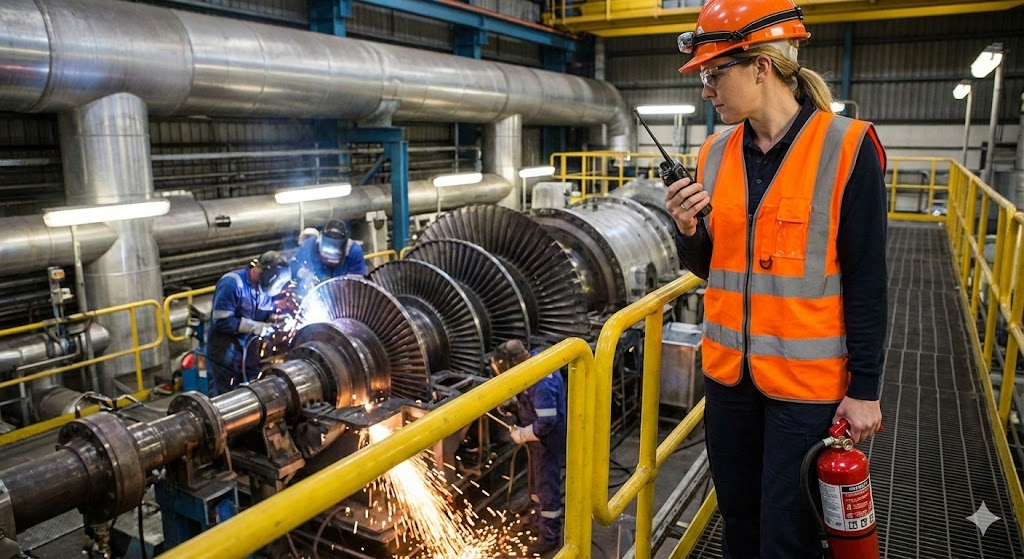
The live presence of a professional fire watch service is crucial during system outages, hot works, or major repairs. Guards can slow or divert work if sparks, dust, or flammable vapors begin to accumulate, keeping both people and production on a safer course. The initial minute after a fire is discovered frequently determines the outcome, so a trained fire watch officer in the right place can sound the alarm, initiate a rudimentary response, and direct others while the larger plan comes into play.
Good fire watch procedures tie into emergency plans, radio use, and clear handover logs. Effective communication can be what separates a small, controlled event from wholesale loss. What worked a decade ago might not accommodate new materials or layouts, so schedules, checklists, and skills require regular revision to meet current fire safety regulations.
A Human Element
Fire watch guards add a human element that tools alone can’t provide. They detect minute changes, such as a whiff of burning by some wires, eerie popping sounds emanating from a rack of servers, or a hot door panel in a sealed room.
Their training goes past simple patrols. They learn to read subtle warning signs, judge wind and airflow, and move people safely without panic. Advanced training only pays off when guards use these lessons on every round, test routes, and talk through “what if” cases with supervisors.
Maintaining focus during long shifts is a challenging assignment, so quality programs employ varied patrol routes, random check-in locations and quick job switches to keep guards energized. Seasonal risks change the job again. In winter, they pay more attention to portable heaters and overworked wiring. In summer, they watch roof units, battery rooms, and cooling systems that may run near their limits.
A Proactive Shield
Proactive fire watch views risk as fluid, not static, and it seeks to extinguish a fire before it ignites by catching the little things that signal a bigger issue. Beyond flame and smoke, expert guards seek scorch marks, tripped breakers, odd condensation on electrical panels, or small leaks near hot surfaces that could flare later.
Scheduled by risk and not just time, routine patrols provide wide coverage across warehouses, data centers, hospitals, and construction zones so no high risk nook is “out of sight, out of mind.” In high-hazard plants, quarterly refresher training keeps rules, routes, and local fire codes fresh, reinforcing rigorous standards and reducing the risk of minor lapses.
Highly visible, well-briefed fire watch reduces liability during crowded events, hot work close to public access areas or shutdowns in large facilities, as it demonstrates the company made obvious, practical efforts to keep people safe. Continued education isn’t optional. New materials, layouts and tools mean guards have to keep learning in order to stay ahead of modern fire hazards.
How Fire Watch Services Support Operations
Fire watch security ties safety regulations to real-world business requirements, ensuring operations can proceed even if fire systems are compromised or sites are deemed more vulnerable to fire hazards.
1. Ensuring Compliance
Fire watch services step into that gap when alarms, sprinklers, or suppression systems are down. Multiple codes, including NFPA-based ones, mandate a fire watch in the event a system is offline for over four hours in a 24-hour span. Businesses that overlook this hazard face work stoppage orders, increased exposure, and even loss of permits.
Professional officers record patrol routes, discoveries and remediation in real time. These logs prove to inspectors and insurers that you complied with local fire marshal mandates and that you had uninterrupted coverage until systems were restored. It’s this type of evidence that frequently carries more weight than motive if something does happen.
Quality providers maintain close relationships with fire authorities and compliance officials. They adapt post orders when regulations shift, so your internal protocols, logs, and drill schedules align with what officials anticipate onsite.
2. Mitigating Risk
A strong fire watch service includes a risk check of the entire location, not only the panel. High-risk zones are common, including hot work areas, temporary power runs, refuelling points, battery rooms, data halls, and any place with stacked packaging or solvents.
Guards then concentrate their rounds on these areas and any exit routes people would use to evacuate the building. They inspect for obstructed exits, frayed cables, cluttered housekeeping or insecure contractor work. If they observe a cart obstructing a stairwell or exit, they relocate it immediately and log the correction.
Fire watch acts as a frontline during hot work, shutdowns, or phased construction. It’s a fact that when your fire protection is down and you don’t have a fire watch, fire risk can jump 40 to 60 percent. Having trained eyes on the ground, with patrols every 30 to 60 minutes, prevents small hazards from becoming incidents.
3. Enabling Continuity
Fire watch keeps you up and running while your systems are down, rather than forcing you to shut down altogether. In the event of an alarm or sprinkler outage, officers serve as your initial line of defense, providing you with peace of mind and actual protection.
In healthcare, logistics and manufacturing, a brief stop may not be possible. Fire watch keeps essential wards, server rooms, or 24-hour warehouses operational, provided coverage continues until automation is back in place. When fire watch is integrated into business continuity, it becomes a known step rather than a thrown together, last-minute solution.
4. Protecting Assets
Fire watch guards assist in protecting inventory, equipment, and the essential infrastructure that keeps a business running. They monitor warehouse racks, fuel stores, temporary chemical installations, battery cabinets, and even older electrical rooms. Patrols are so frequent that heat sources, sparks, or leaks are picked up before they reach high-value gear or dense storage.
Insurers want evidence of proactive fire prevention. Detailed records of patrol rounds, hot-spot inspections and immediate interventions minimize wrangling post-claim and can assist with terms in the long run. In these known high-risk periods, such as system repair, seasonal heat, or big events, additional fire watch posts safeguard both the building shell and crucial infrastructure zones.
5. Supporting Personnel
They feel safer when they see trained officers on the floor, not just cameras and panels on the wall. Fire watch personnel monitor doors, paths, and congregation areas to maintain them free and accessible.
Most officers drill evacuation, rudimentary first aid and calm, clear 911 and first responder calls. They can direct crowds, assist an injured person and provide initial medical assistance until the paramedics show up. They huddle frequently with on-site safety leads and managers, so reports circulate quickly and everyone understands their role if an alarm rings.
Integrating Technology for Enhanced Vigilance
Technology in fire watch security doesn’t supplant boots on the ground; instead, it enhances vigilant monitoring by providing more eyes, richer data, and faster connections between what fire watch personnel observe and how managers and responders react to potential fire hazards.
Real-Time Reporting
Mobile reporting tools allow fire watch guards to log hazards, blocked exits, hot work or system failures with a few taps, frequently with photos, time stamps and GPS location. This generates data integrity and eliminates speculation from scribbled charts that might be missing or illegible.
Real-time updates go at the same speed to facility managers, control rooms and, when necessary, emergency services. No longer do they have to wait for the next patrol round. A manager can see a live feed of issues and respond before a small problem escalates into shutdown or fire.
Digital patrol tracking maps indicate where and when guards walked, which floors they checked, and how long they lingered. This assists in demonstrating coverage, detecting route gaps, and providing compelling proof of compliance to regulators and insurers, particularly on high-risk sites such as refineries or major construction projects.
Automated reports draw this data into crisp summaries, saving time and reducing mistakes. AI tools can alert to atypical trends, overlooked checks or recurring trouble areas that require a procedural repair, not just a log entry.
Sensor Integration
Tying fire watch to smoke, heat, and gas sensors provides a secondary layer of early warning that is important when fixed systems like sprinklers or alarms are down and the window of vulnerability is wide open.
For example, sensor data can identify hot zones, such as locations where there are repeated high temperatures near equipment or welding. This allows supervisors to adapt patrol routes on the fly and dispatch more frequent inspections to the right places, instead of simply making everyone walk the same loop every hour.
Connected alarm panels and wireless devices increase situational awareness for guards. One guard can view which specific room triggered an alarm on a handheld device, review video from that location if cameras are connected, and verify in person before contacting the fire brigade. This process reduces false alarms and unnecessary dispatches.
Smart filtering and simple AI logic help screen out noise, such as short harmless spikes or dust that can set off older sensors. This reduces expenses due to unnecessary fire watch extensions while still maintaining rigorous monitoring where actual hazards are present. It generates more accurate records to inform audits and safety evaluations.
Conclusion
Fire watch occupies the sidelines, yet it keeps projects moving. It keeps doors open safely. It keeps teams courageous in tough times. One prominent example is a plant that maintains lines during a brief alarm outage. Guards patrol every floor, record risks and collaborate with employees.
Fire watch brings obvious cost value. It can reduce loss from fire, downtime, fines, and rushed repairs. A quality team melds individuals, defined strategies, and intuitive technology.
For comprehensive safety beyond basic compliance, start a conversation with a trusted fire watch provider, challenge them with tough questions, and plan protection that fits your location.
Frequently Asked Questions
What is a fire watch service and how does it support daily operations?
Fire watch is a provisional safety protocol when fire alarms or sprinklers are temporarily inoperable. Professional fire watch services employ specialized trained guards who conduct vigilant monitoring for early hazard detection and coordinated emergency response, ensuring a safe environment while allowing operations to continue with less interruption and danger.
When is a fire watch legally required for businesses?
Fire watch security is typically needed during fire system outages, hot work, high fire risk activities, and major renovations. Local fire codes and AHJs determine these triggers. Collaborating with professional fire watch services ensures compliance and helps avoid fines or shutdowns.
How can fire watch services reduce business downtime?
Fire watch security keeps you up and running by meeting code mandates while systems are down. Fire watch personnel monitor such fire hazards in real time, enabling critical work to continue safely. This minimizes downtime, safeguards timelines, and helps in keeping projects and production on schedule.
What is the cost–benefit of hiring a fire watch service?
Fire watch security has an obvious bottom line benefit, typically being less expensive than fines, unscheduled shutdowns, or fire damage. A qualified provider of professional fire watch services assists in managing fire risks, safeguarding assets, and sustaining continuity.
How does technology improve modern fire watch services?
Industry pros employ digital patrol logs, GPS tracking, and incident reporting apps alongside professional fire watch services like smart sensors or cameras. These solutions enhance vigilant monitoring, provide real-time visibility, and ensure compliance with fire safety regulations.
What should I look for when choosing a fire watch partner?
Verify licenses, insurance, and local code expertise for professional fire watch services. Assure fire watch personnel training, round-the-clock coverage, and transparent reporting. A good partner will learn your operations, tailor fire watch operations to your risks, and maintain clear communication.
Can fire watch services help with long-term fire safety planning?
Yes. These seasoned providers of professional fire watch services typically discover repeat hazards, deficient protocols, and training gaps. Their reports and insights can help direct system upgrades, evacuation plans, and staff training, transforming a short-term mandate into ongoing safety and continuity enhancements.